
Artificial turf in Scottsdale presents a unique maintenance challenge. Arizona's extreme heat — with surface temperatures regularly exceeding 150°F on dark turf — accelerates bacterial growth and intensifies pet odors in ways that temperate-climate turf owners simply don't experience. Without regular professional cleaning, synthetic turf becomes a persistent odor source, a reservoir for harmful bacteria, and an increasingly uncomfortable surface for pets and children. Standard hosing and raking removes surface debris but does nothing for the embedded organic matter and bacterial colonies living within the turf fibers and infill.
Blues Home Services provides professional artificial turf cleaning using biodegradable enzyme treatments specifically formulated to break down the organic compounds responsible for pet odors at the molecular level. Our process combines dry debris removal, enzyme pre-treatment, full turf rinsing, and a final deodorizing application. The result is turf that is genuinely clean — not just visually tidy — safe for pets, children, and barefoot use. Most Scottsdale clients notice a dramatic improvement after their first professional cleaning, and our recurring monthly maintenance programs are ideal for pet-heavy households.
What's Included
- Dry blowing and debris removal (leaves, dust, organic matter)
- Full enzyme pre-treatment for pet urine and organic odors
- Complete high-volume water rinse (flushes infill and fibers)
- Professional deodorizer application (biodegradable, pH-neutral)
- Turf fiber re-grooming and lifting
- Post-cleaning surface inspection
By the Numbers
Summer UV index readings of 11+ (“extreme” on the EPA scale) mean organic stains and grime literally bake onto Arizona exterior surfaces, bonding harder the longer they sit.
Source: U.S. EPA UV Index scale; National Weather Service UV forecasts for Phoenix
Arizona State University urban climate researchers have measured Phoenix pavement surfaces well above 140°F on summer afternoons — surface heat that sets oil drips and organic grime onto driveways and walkways far faster than in milder climates.
Source: Arizona State University urban climate research on surface temperatures
Our Process
All surface debris — leaves, desert dust, palm fronds, and organic matter — is cleared by blowing and raking before any wet treatment begins.
Biodegradable enzyme solution is applied across the entire turf surface and allowed to dwell, breaking down organic compounds and odor sources at the molecular level.
High-volume water application flushes the enzyme solution and dissolved organic matter through the turf, infill, and into the drainage system below.
pH-neutral, biodegradable deodorizer is applied and worked into the turf fibers — leaving a clean, fresh surface that is safe for pets and children.
Turf fibers are re-groomed and lifted for a fresh, uniform appearance. Final inspection confirms full coverage and proper drainage.
For Scottsdale pet owners, professional artificial turf cleaning on a monthly or bi-monthly schedule is the most effective way to maintain a safe, odor-free outdoor surface year-round. Arizona's heat amplifies enzyme effectiveness — the same warmth that intensifies pet odors also accelerates enzyme treatment, making professional cleaning particularly effective in Scottsdale's climate. Call (480) 901-4768 for a free turf cleaning estimate.
Frequently Asked Questions
Scottsdale Customer Reviews
"Great job and great service. Best outside cleaning we have ever had. Our windows never have been so clean. Thank you"
Recent Work Examples
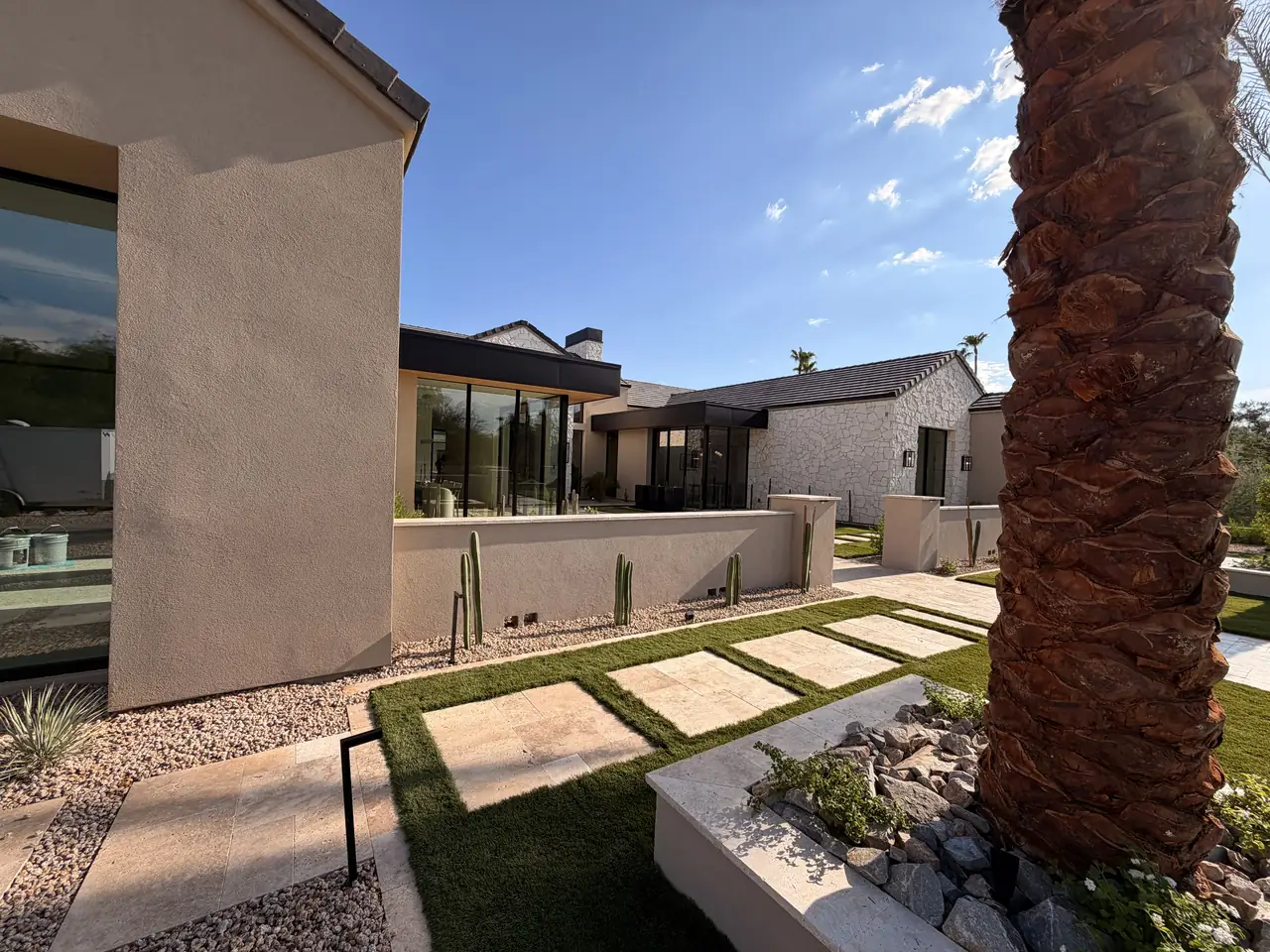
Original field photos showing outdoor materials, equipment access, and service conditions encountered by Blues Home Services. We assess each property before confirming the cleaning scope.
Look beyond the visible turf fibers
A useful Scottsdale turf-cleaning plan considers how the area is used and where water can move. Pet activity, shade, surrounding stone, low spots, edge details, and the condition of the infill can matter more than the size of the lawn alone.
- Share whether pets use the turf and identify their most-used areas.
- Point out low spots, slow drainage, lifted edges, seams, and compacted traffic paths.
- Note nearby planters, stepping stones, pool edges, and surfaces that collect runoff.
- Describe the odor or debris concern instead of assuming every area needs the same treatment.
- Confirm what debris removal, rinsing, grooming, and final cleanup are included.
- Separate cleaning questions from installation, drainage, seam, or infill repair needs.
The photo above shows turf integrated with stone paths and landscape edges, a useful example of why surrounding materials and drainage access belong in the service discussion.
Get a Free Artificial Turf Cleaning Estimate
Same-week scheduling available across Scottsdale, Paradise Valley, Fountain Hills, Gilbert & the Phoenix metro.
