
Fountain Hills' hillside homes enjoy panoramic outdoor views that make patio living an essential part of daily life — and that means outdoor furniture is in continuous use, continuously exposed to Arizona's environment. Hillside exposure intensifies several challenges: wind-driven desert dust coats every horizontal and vertical surface between cleaning visits. UV radiation degrades aluminum frames, teak surfaces, and resin weave furniture with particular speed in high-elevation, full-sun exposures common in Fountain Hills. Monsoon season brings brief but intense humidity spikes that encourage mildew formation in cushions and fabric components. Each material type accumulates damage differently and requires a matched cleaning approach.
Blues Home Services brings material-specific knowledge to every Fountain Hills patio furniture cleaning project. We assess each piece before treatment — identifying frame material, fabric type, outdoor kitchen surface composition — and select appropriate chemistry and technique. We do not apply uniform pressure washing that can crack resin furniture, strip teak oils, or damage outdoor upholstery. Instead, we use targeted cleaning methods that restore each material to its best achievable condition without causing additional UV damage or surface deterioration.
What's Included
- Aluminum, wrought iron, and steel frame cleaning
- Resin, polyrattan, and teak furniture restoration
- Outdoor cushion and fabric cleaning
- Umbrella cleaning and frame treatment
- Outdoor kitchen surface cleaning (stainless, tile, stone, grill exteriors)
- Metal surface UV-protective treatment after cleaning
By the Numbers
Summer UV index readings of 11+ in the Phoenix area — “extreme” on the EPA scale — fade and weaken outdoor fabrics faster than almost anywhere in the country, which is why regular deep cleaning and protection matter for patio furniture here.
Source: U.S. EPA UV Index scale; National Weather Service UV forecasts for Phoenix
The National Weather Service documents Phoenix-area dust storms with walls of dust reaching several thousand feet high — fine desert dust works deep into outdoor fabrics, fixtures, and crevices in a way surface wiping cannot remove.
Source: National Weather Service, Phoenix office haboob documentation
Iron & Cast-Aluminum Furniture: Calcium & Hard-Water Spot Removal
Wrought-iron and cast-aluminum patio sets — the woven basketweave-pattern tables and chairs common on Fountain Hills patios — develop a very specific problem that ordinary furniture cleaning does not solve: chalky white calcium and hard-water spotting baked into the textured metal casting. Sprinkler overspray and hose rinse water evaporate in the sun, leaving mineral deposits embedded in every groove of the cast pattern. Left untreated, these deposits etch into the powder-coat finish and accelerate surface oxidation underneath.
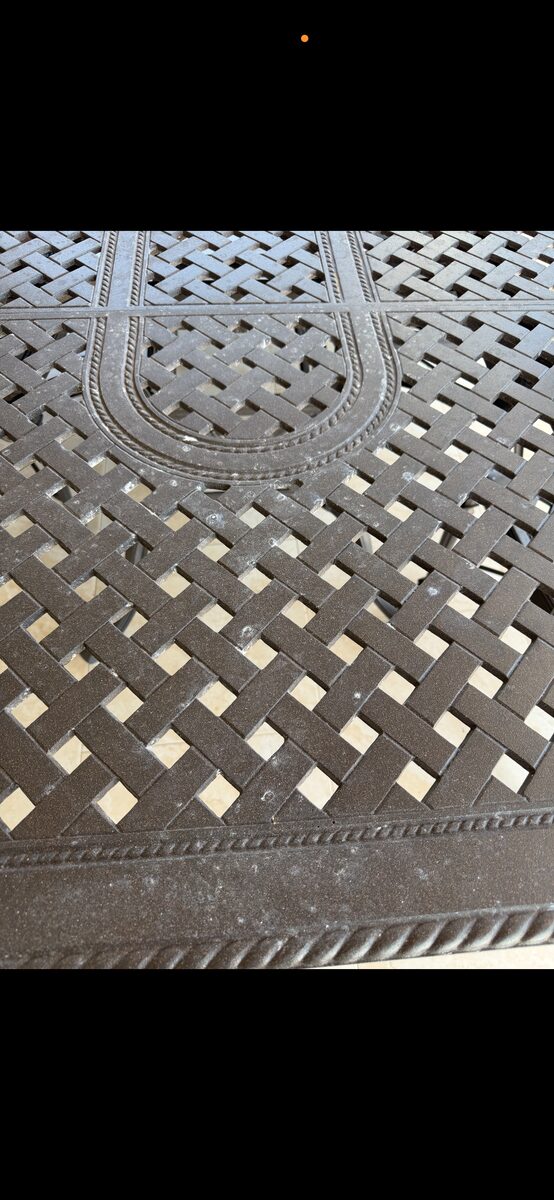
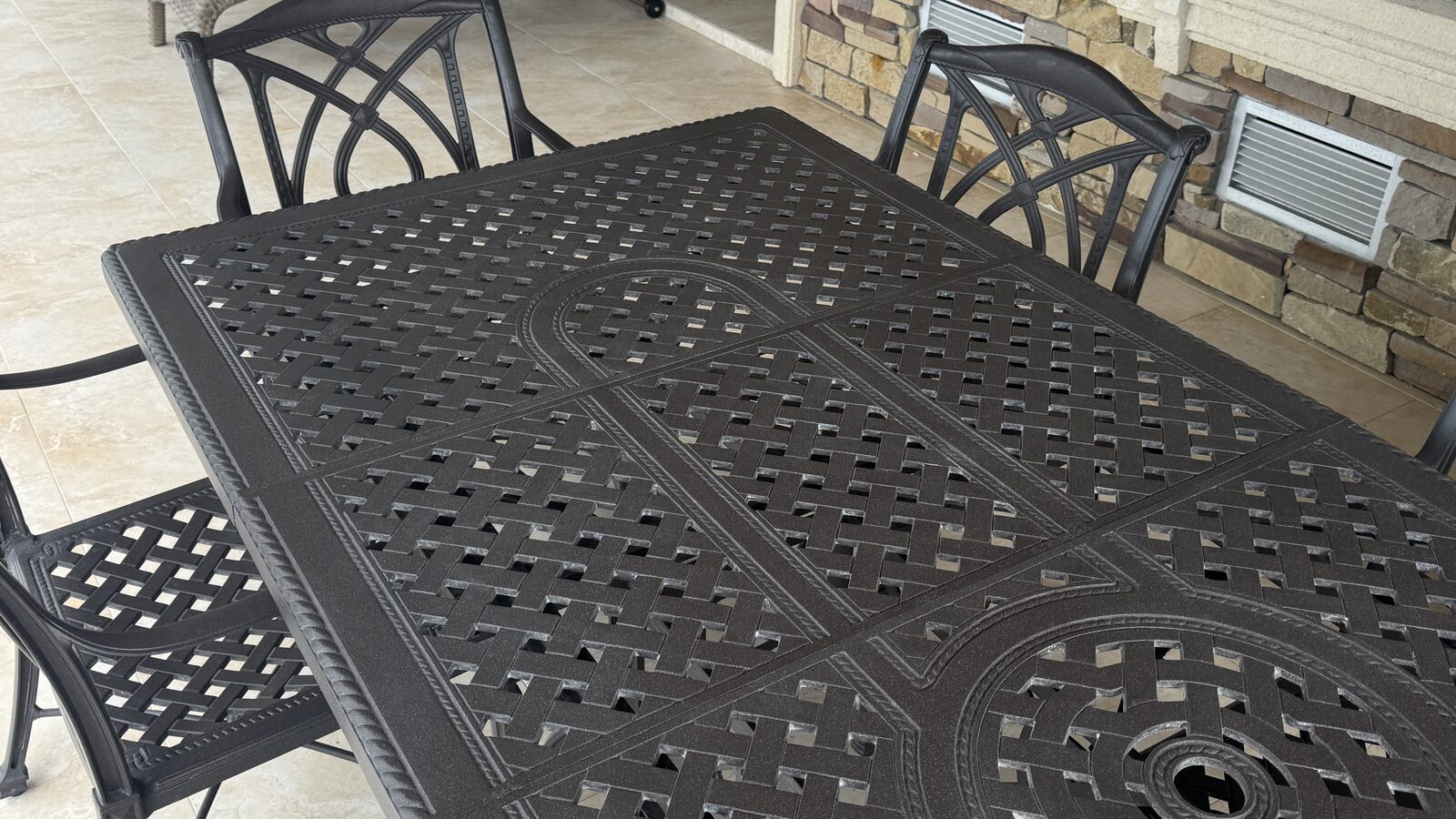
We treat iron and cast-aluminum frames as a dedicated step within patio furniture cleaning, not a quick wipe-down. A pH-balanced descaling solution is worked into the cast pattern by hand and soft brush to lift mineral buildup out of every recess without stripping the powder-coat or anodized finish, followed by a full rinse and a protective sealant pass that slows future spotting from irrigation and hard water. Most Fountain Hills sets need this treatment once or twice a year to stay ahead of the region's mineral-heavy water.
Seeing white spotting on your own iron or cast-aluminum set? It's one of the most common calls we get after monsoon irrigation cycles. Request a free estimate or call (480) 901-4768 — most calcium removal visits are completed same-day.
Our Process
Every piece assessed individually — frame material, fabric type, surface finish — with appropriate cleaning agents selected before treatment.
All furniture pre-rinsed to remove loose desert dust. Cushions and removable components separated for individual cleaning.
Material-specific cleaning applied: mild alkaline for aluminum, stainless cleaner for steel, enzyme treatment for teak, appropriate low-pressure wash for resin.
Outdoor cushions cleaned with fabric-safe solutions, thoroughly rinsed, and positioned for complete air drying.
All surfaces inspected after drying. Metal surfaces receive UV-protective treatment to slow re-oxidation.
Fountain Hills' outdoor living environment means patio furniture is central to how homeowners use their properties — and professionally maintained furniture lasts measurably longer than furniture cleaned with consumer products alone. Twice-yearly professional cleaning (spring before outdoor season; fall after monsoon) is the most effective maintenance schedule for most Fountain Hills homes. Call (480) 901-4768 for a free patio furniture cleaning estimate.
Plan handling and drying before cleaning a Fountain Hills patio set
Outdoor furniture guidance reviewed
For Fountain Hills outdoor furniture cleaning, describe the route from the driveway to the seating area, including stairs, narrow gates, terraces and surfaces that should remain protected. A sectional on an upper patio may need a different staging plan from loose dining chairs at ground level. These are access questions, not assumptions about any particular home or neighborhood.
Separate frame concerns from cushion concerns. White residue may be surface soil, mineral deposits or coating deterioration; a photo alone cannot identify the cause reliably. Check whether metal is painted or powder coated, whether woven material is brittle and whether wood has a previous finish. Aggressive washing can worsen already weakened finishes, so disclose flaking, cracks and loose joints before agreeing the work.
For exposed seating, secure lightweight pieces and choose a protected drying location with ventilation. Do not tightly cover cushions just because the outside feels dry. Cleaning cannot reverse UV fading or repair rotten seams, and blanket claims that every stain will disappear are not a useful basis for comparing quotes. Request separate line items for cushions, frame cleaning, umbrellas and optional treatment, with any corrective visit governed by the accepted written scope.
| Item | What to confirm |
|---|---|
| Outdoor cushions and pillows | Care label, construction, stains and moisture handling |
| Frames, slings and woven parts | Material, coating condition and compatible cleaning |
| Umbrellas and optional treatments | Separate scope, product compatibility and care instructions |
| Price and reuse plan | Piece count, access, exclusions and drying arrangements |
What should I include in a Fountain Hills patio-furniture cleaning quote request?
For Fountain Hills, list the number of frames, seat pads, back cushions, pillows and umbrellas; include care labels when available. Describe stains, previous treatments, access and where pieces can dry. The estimate should distinguish outdoor upholstery from hard-frame cleaning and optional treatments.
Can cleaning reverse faded outdoor cushions in Fountain Hills?
Cleaning your Fountain Hills furniture may remove compatible soil and some stains, but it does not replace dye lost through sun exposure or repair weakened fabric, torn seams or failed coatings. Assessment and testing help identify realistic improvement before you approve the work.
When can I use the cleaned cushions again in Fountain Hills?
Reuse timing for a Fountain Hills project depends on the fabric, insert thickness, treatment and weather. Follow the care and drying instructions given for the actual pieces. A dry outer cover does not prove the foam is dry, so do not stack or tightly cover damp cushions.
Frequently Asked Questions
Fountain Hills water can leave a different cleaning problem than dust
EPCOR's Chaparral District supplies Fountain Hills. Its published water-quality report lists hardness at approximately 18 grains per gallon and explains that calcium-carbonate deposits can remain after water evaporates. The report also notes that hardness can change seasonally because the supply includes both surface water and groundwater.
- Identify chairs, table bases, umbrella stands, and outdoor-kitchen panels reached by irrigation overspray.
- Separate chalky mineral residue from loose desert dust when describing the problem.
- Show close photos of deposits around fasteners, frame joints, glass edges, and woven material.
- Note whether spotting appears seasonally or changes after irrigation adjustments.
- Ask for a small-area assessment before aggressive treatment on an unfamiliar finish.
- Redirect sprinkler heads before service when repeated overspray is the likely source.
A cleaning quote should distinguish removable surface deposits from fading, coating loss, corrosion, or other material changes that cleaning cannot reverse.
Get a Free Patio Furniture Cleaning Estimate
Same-week scheduling available across Scottsdale, Paradise Valley, Fountain Hills, Gilbert & the Phoenix metro.
